---
title: The Two Headed Bird, Also in Hindi | Bachpan Diaries
description: A bird with two heads shares one stomach, until one refuses to share a sweet fruit and the other retaliates with a poisonous berry. A sharp Panchatantra tale, also in Hindi.
image: https://bachpandiaries.com/hubfs/bachpan-diaries-theme/blog/featured%20images/PNGs/Split%20Fruit%20and%20Dark%20Berry%20%E2%80%94%20The%20Choice%20That%20Cost%20Everything.png
---
[Skip to main content](https://bachpandiaries.com/stories/the-two-headed-bird#main-content)
[.svg) .svg) Bachpan Diaries](https://bachpandiaries.com/)
- Stories
- [Quizzes](https://bachpandiaries.com/quizzes)
- [Dor - Mini Game](https://bachpandiaries.com/dor)
- [Our Story](https://bachpandiaries.com/our-story)
- [Contact Us](https://bachpandiaries.com/contact)
EN [हिं](https://bachpandiaries.com/hi/stories/do-sir-wala-pakshi)
Aa
Reading Mode
Default
B&W
Night
Paper grain
−
Subtle
\+
Font size
A−
Default
A+
↺ Reset preferences
Browse by age
Every age has *a story.*
Five sections — one for every chapter of childhood and memory.
[All stories](https://bachpandiaries.com/stories)
[**Nanhe Sitare** 0 – 6](https://bachpandiaries.com/stories/tag/section-nanhe-sitare) [ The Turtle Who Talked Too Much](https://bachpandiaries.com/stories/the-turtle-who-talked-too-much) [ The Stars That Counted](https://bachpandiaries.com/stories/the-stars-that-counted) [See all Nanhe Sitare →](https://bachpandiaries.com/stories/tag/section-nanhe-sitare)
[**Padhna Seekho** 7 – 12](https://bachpandiaries.com/stories/tag/section-padhna-seekho) [ Three Suitors and Somprabha](https://bachpandiaries.com/stories/three-suitors-and-somprabha) [ Two Friends and the Bear](https://bachpandiaries.com/stories/two-friends-and-the-bear) [See all Padhna Seekho →](https://bachpandiaries.com/stories/tag/section-padhna-seekho)
[**Kisse Kahani** 13 – 17](https://bachpandiaries.com/stories/tag/section-kisse-kahani) [ The School Trip](https://bachpandiaries.com/stories/the-school-trip) [ The Last Bench](https://bachpandiaries.com/stories/the-last-bench) [See all Kisse Kahani →](https://bachpandiaries.com/stories/tag/section-kisse-kahani)
[**Bachpan Diaries** 18 – 40](https://bachpandiaries.com/stories/tag/section-bachpan-diaries) [ Do You Remember Shaktimaan?](https://bachpandiaries.com/stories/do-you-remember-shaktimaan) [ What He Left Behind](https://bachpandiaries.com/stories/what-he-left-behind) [See all Bachpan Diaries →](https://bachpandiaries.com/stories/tag/section-bachpan-diaries)
[**Yaadein** 40+](https://bachpandiaries.com/stories/tag/section-yaadein) [ My Grandmother's House](https://bachpandiaries.com/stories/my-grandmothers-house) [ The Letters We Never Sent](https://bachpandiaries.com/stories/the-letters-we-never-sent) [See all Yaadein →](https://bachpandiaries.com/stories/tag/section-yaadein)
Browse Stories
[All Stories](https://bachpandiaries.com/stories)
[**Nanhe Sitare** 0 – 6](https://bachpandiaries.com/stories/tag/section-nanhe-sitare) [**Padhna Seekho** 7 – 12](https://bachpandiaries.com/stories/tag/section-padhna-seekho) [**Kisse Kahani** 13 – 17](https://bachpandiaries.com/stories/tag/section-kisse-kahani) [**Bachpan Diaries** 18 – 40](https://bachpandiaries.com/stories/tag/section-bachpan-diaries) [**Yaadein** 40+](https://bachpandiaries.com/stories/tag/section-yaadein)
Recent Stories
[ Padhna Seekho Three Suitors and Somprabha](https://bachpandiaries.com/stories/three-suitors-and-somprabha) [ Bachpan Diaries Do You Remember Shaktimaan?](https://bachpandiaries.com/stories/do-you-remember-shaktimaan) [ Nanhe Sitare The Turtle Who Talked Too Much](https://bachpandiaries.com/stories/the-turtle-who-talked-too-much) [ Padhna Seekho Two Friends and the Bear](https://bachpandiaries.com/stories/two-friends-and-the-bear)
[Quizzes](https://bachpandiaries.com/quizzes) [Dor - Mini Game](https://bachpandiaries.com/dor) [Our Story](https://bachpandiaries.com/our-story) [Contact Us](https://bachpandiaries.com/contact)
1. [Home](https://bachpandiaries.com/)
2. /
3. [Stories](https://bachpandiaries.com/stories)
[Padhna Seekho](https://bachpandiaries.com/stories/tag/section-padhna-seekho) [Wisdom](https://bachpandiaries.com/stories/tag/theme-wisdom) [Morality](https://bachpandiaries.com/stories/tag/theme-morality) [🌐 हिंदी में पढ़ें](https://bachpandiaries.com/hi/stories/do-sir-wala-pakshi)
# The Two Headed Bird
By Manoj Rajput • June 22, 2026
Now Playing The Two Headed Bird
0:00 / —
1×
There was once a bird with two heads.
Both heads belonged to the same body. One set of wings. One stomach. Two heads — each with their own eyes, their own thoughts, their own opinions.
They lived near a river and ate fruit from the trees. The body was fed when either head ate — the stomach was shared even if the heads were not.
For a long time this worked.
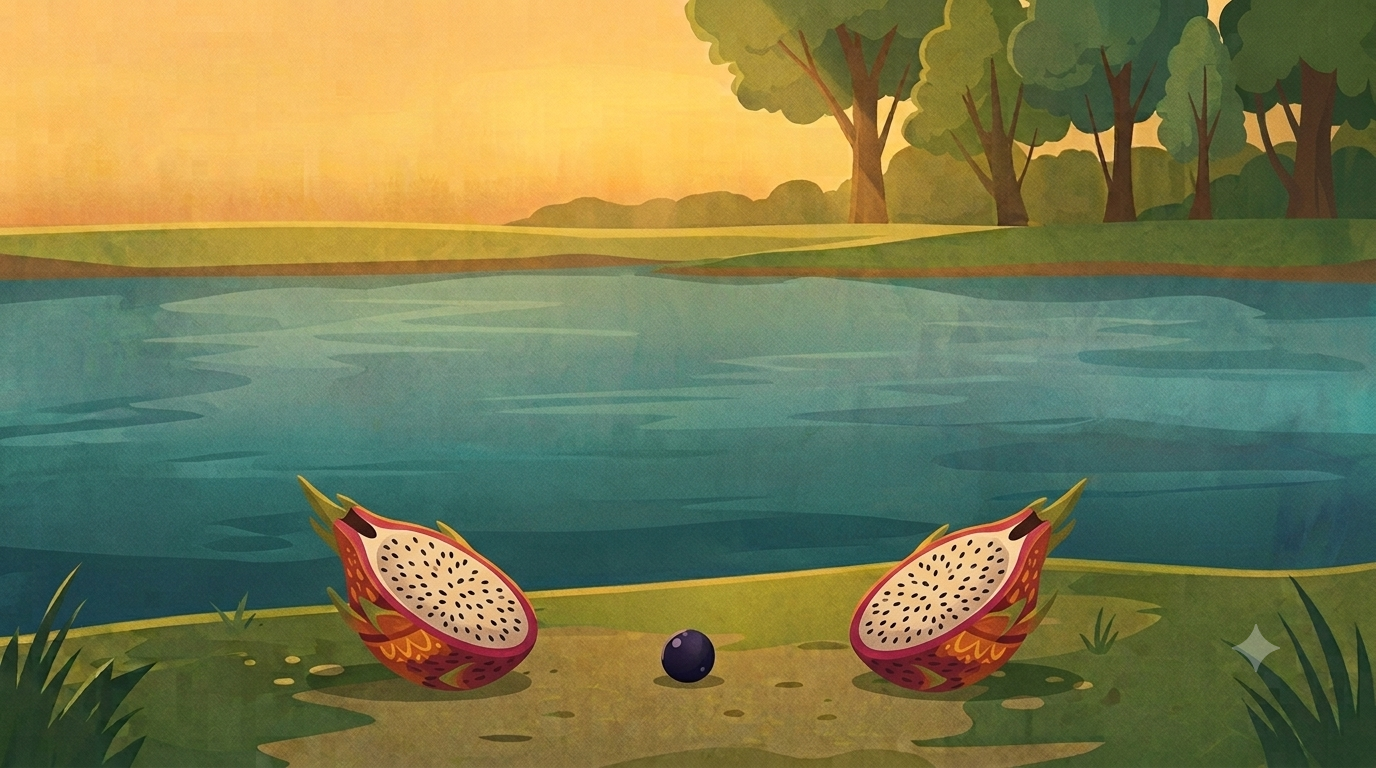
One morning the first head found a beautiful fruit on the riverbank. Sweet smelling. Ripe. He had never seen this kind before.
He ate it slowly. Every bite was extraordinary.
The second head watched.
"Give me some," the second head said.
"I found it," the first head said. "It is mine."
"We share the same stomach. When you eat I am also fed. But I want to taste it too."
"No," said the first head. And ate the last of it.
The second head said nothing.
A few days later the second head found something near the water.
It was not fruit. It was a berry — dark, unfamiliar. Something about it looked wrong. But the second head picked it up anyway.
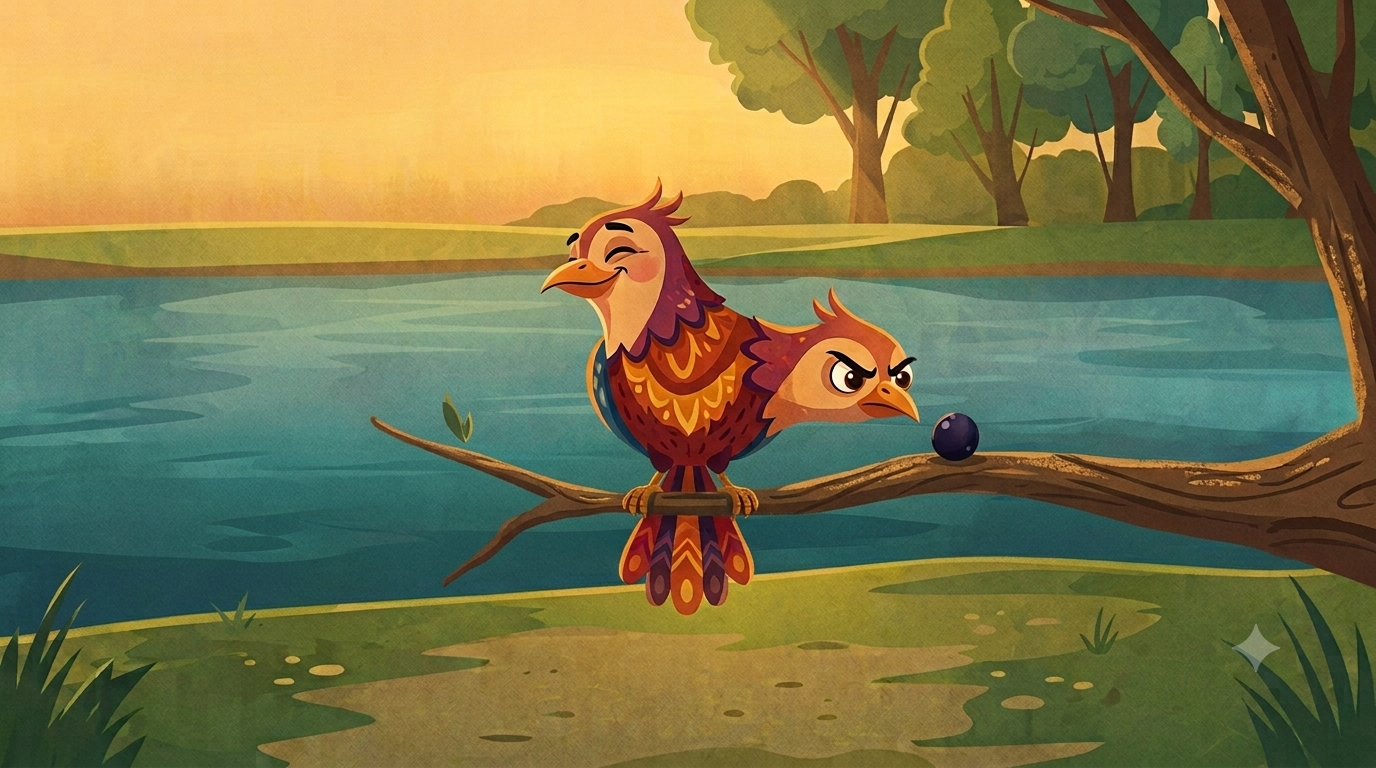
"What is that?" the first head asked. "It does not look safe."
"I found it," the second head said. "It is mine."
"We share the same stomach. If you eat that it will poison both of us."
"You did not share with me," the second head said. "Why should I share with you?"
He ate it.
The body had one stomach. What the second head swallowed reached them both.
They both died that afternoon by the river.
Fighting with your own — harms your own.
There is no winning side.
✦
✦ Kahaani Khatam ✦
Region [Pan India](https://bachpandiaries.com/stories/tag/region-pan-india)
Format [Text](https://bachpandiaries.com/stories/tag/format-text)
Source [Panchatantra](https://bachpandiaries.com/stories/tag/source-panchatantra)
Characters [Animals](https://bachpandiaries.com/stories/tag/char-animals)
Read time [Short](https://bachpandiaries.com/stories/tag/time-short)
[← Previous story The Monkey and the Wedge](https://bachpandiaries.com/stories/the-monkey-and-the-wedge) [Next story → The Camel and the Jackal](https://bachpandiaries.com/stories/the-camel-and-the-jackal)
Does this remind you of something? [Leave a comment below](https://bachpandiaries.com/stories/the-two-headed-bird#post-comments).
Share [WhatsApp](https://wa.me/?text=The+Two+Headed+Bird%2C+Also+in+Hindi+%7C+Bachpan+Diaries%20https%3A%2F%2Fbachpandiaries.com%2Fstories%2Fthe-two-headed-bird) [X](https://twitter.com/intent/tweet?text=The+Two+Headed+Bird%2C+Also+in+Hindi+%7C+Bachpan+Diaries&url=https%3A%2F%2Fbachpandiaries.com%2Fstories%2Fthe-two-headed-bird) [Facebook](https://www.facebook.com/sharer/sharer.php?u=https%3A%2F%2Fbachpandiaries.com%2Fstories%2Fthe-two-headed-bird)
Copy link

Manoj Rajput
I'm the founder of Bachpan Diaries. I started this project chasing down the small, ordinary memories of growing up in India that never seem to get written down anywhere, madaari shows, school bells, dabbas from home. I still read every story myself before it goes up.
FROM THE ARCHIVE
## Continue the Journey
### [ Ages 7–12 हिं There was once a great and prosperous city, and in it lived a wealthy merchant named Hariswami. He had a daughter, Somprabha, beautiful and clever, skilled in dance, music, and the scriptures, a woman who had mastered nearly every art worth learning. Read story → Padhna Seekho · 4 min read Three Suitors and Somprabha Wisdom There was once a great and prosperous city, and in it lived a wealthy merchant named Hariswami. He had a daughter, Somprabha, beautiful and clever, skilled in dance, music, and the scriptures, a woman who had mastered nearly every art worth learning. Manoj Rajput Oct 3](https://bachpandiaries.com/stories/three-suitors-and-somprabha)
### [ Ages 7–12 हिं There was a dense forest, and a narrow trail cut through it, the shortest way to the village on the other side. Two friends were walking that trail one evening. One was called Ramu, the other Shyamu. Read story → Padhna Seekho · 3 min read Two Friends and the Bear Friendship There was a dense forest, and a narrow trail cut through it, the shortest way to the village on the other side. Two friends were walking that trail one evening. One was called Ramu, the other Shyamu. Manoj Rajput Sep 27](https://bachpandiaries.com/stories/two-friends-and-the-bear)
### [ Ages 7–12 हिं One day a magician arrived at the court of King Krishnadevaraya. Read story → Padhna Seekho · 2 min read Tenali Raman and the Magician Wisdom One day a magician arrived at the court of King Krishnadevaraya. Manoj Rajput Jul 4](https://bachpandiaries.com/stories/tenali-raman-and-the-magician)
[All Stories](https://bachpandiaries.com/stories)
## Comments
MORE LIKE THIS
### More on this theme
[](https://bachpandiaries.com/stories/three-suitors-and-somprabha) [Three Suitors and Somprabha](https://bachpandiaries.com/stories/three-suitors-and-somprabha)
There was once a great and prosperous city, and in it lived a wealthy merchant named Hariswami. He had a daughter, Somprabha, beautiful and clever, skilled in dance, music, and the scriptures, a woman who had mastered nearly every art worth learning.
[Read story →](https://bachpandiaries.com/stories/three-suitors-and-somprabha)
[](https://bachpandiaries.com/stories/the-turtle-who-talked-too-much) [The Turtle Who Talked Too Much](https://bachpandiaries.com/stories/the-turtle-who-talked-too-much)
There was a pond, and in that pond lived a turtle. His name was Golu.
[Read story →](https://bachpandiaries.com/stories/the-turtle-who-talked-too-much)
[](https://bachpandiaries.com/stories/two-friends-and-the-bear) [Two Friends and the Bear](https://bachpandiaries.com/stories/two-friends-and-the-bear)
There was a dense forest, and a narrow trail cut through it, the shortest way to the village on the other side. Two friends were walking that trail one evening. One was called Ramu, the other Shyamu.
[Read story →](https://bachpandiaries.com/stories/two-friends-and-the-bear)
EXPLORE
### Other chapters
- [🌟 Nanhe Sitare Ages 0–6](https://bachpandiaries.com/stories/tag/section-nanhe-sitare)
- [📚 Padhna Seekho Ages 7–12](https://bachpandiaries.com/stories/tag/section-padhna-seekho)
- [🎭 Kisse Kahani Ages 13–17](https://bachpandiaries.com/stories/tag/section-kisse-kahani)
- [📖 Bachpan Diaries Ages 18–40](https://bachpandiaries.com/stories/tag/section-bachpan-diaries)
- [🕰 Yaadein Ages 40+](https://bachpandiaries.com/stories/tag/section-yaadein)
STAY UPDATED
### New stories every week.
No spam. Unsubscribe any time.
Share
Copy
Continue where you left off?
Resume
Dismiss
[.svg) .svg)](https://bachpandiaries.com/stories)
Bachpan Diaries
- [Stories](https://bachpandiaries.com/stories)
- [Our Story](https://bachpandiaries.com/our-story)
- [Contact Us](https://bachpandiaries.com/contact)
- [Privacy Policy](https://bachpandiaries.com/privacy-policy)
- [Terms of Service](https://bachpandiaries.com/terms-of-service)
© 2026 Bachpan Diaries. Stories for Every Childhood
```json
{
"@context" : "https://schema.org",
"@type" : "BlogPosting",
"author" : {
"@type" : "Person",
"name" : "Manoj Rajput",
"url" : "https://bachpandiaries.com/stories/author/manoj-rajput"
},
"dateModified" : "2026-08-24T17:49:45.122Z",
"datePublished" : "2026-06-21T18:30:00.000Z",
"headline" : "The Two Headed Bird, Also in Hindi | Bachpan Diaries",
"image" : [ "https://bachpandiaries.com/hubfs/bachpan-diaries-theme/blog/featured%20images/PNGs/Split%20Fruit%20and%20Dark%20Berry%20%E2%80%94%20The%20Choice%20That%20Cost%20Everything.png" ],
"mainEntityOfPage" : {
"@id" : "https://bachpandiaries.com/stories/the-two-headed-bird",
"@type" : "WebPage"
},
"publisher" : {
"@type" : "Organization",
"logo" : {
"@type" : "ImageObject",
"url" : "https://bachpandiaries.com/hubfs/bachpan-kite-icon.svg"
},
"name" : "BachpanDiaries"
}
}
```
```json
{
"@context" : "https://schema.org",
"@type" : "BreadcrumbList",
"itemListElement" : [ {
"@type" : "ListItem",
"item" : "https://bachpandiaries.com/",
"name" : "Home",
"position" : 1
}, {
"@type" : "ListItem",
"item" : "https://bachpandiaries.com/stories",
"name" : "Stories",
"position" : 2
}, {
"@type" : "ListItem",
"item" : "https://bachpandiaries.com/stories/the-two-headed-bird",
"name" : "The Two Headed Bird, Also in Hindi | Bachpan Diaries",
"position" : 3
} ]
}
```