---
title: The Last Bench | Bachpan Diaries
description: A short story set in a South Indian classroom, about a quiet teenager who collects old maps and the teacher who actually notices him. Also in Hindi.
image: https://bachpandiaries.com/hubfs/bachpan-diaries-theme/blog/featured%20images/PNGs/Empty%20Classroom%20%E2%80%94%20Last%20Bench%20Most%20Worn.png
---
[Skip to main content](https://bachpandiaries.com/stories/the-last-bench#main-content)
[.svg) .svg) Bachpan Diaries](https://bachpandiaries.com/)
- Stories
- [Quizzes](https://bachpandiaries.com/quizzes)
- [Dor - Mini Game](https://bachpandiaries.com/dor)
- [Our Story](https://bachpandiaries.com/our-story)
- [Contact Us](https://bachpandiaries.com/contact)
EN [हिं](https://bachpandiaries.com/hi/stories/aakhri-bench)
Aa
Reading Mode
Default
B&W
Night
Paper grain
−
Subtle
\+
Font size
A−
Default
A+
↺ Reset preferences
Browse by age
Every age has *a story.*
Five sections — one for every chapter of childhood and memory.
[All stories](https://bachpandiaries.com/stories)
[**Nanhe Sitare** 0 – 6](https://bachpandiaries.com/stories/tag/section-nanhe-sitare) [ The Turtle Who Talked Too Much](https://bachpandiaries.com/stories/the-turtle-who-talked-too-much) [ The Stars That Counted](https://bachpandiaries.com/stories/the-stars-that-counted) [See all Nanhe Sitare →](https://bachpandiaries.com/stories/tag/section-nanhe-sitare)
[**Padhna Seekho** 7 – 12](https://bachpandiaries.com/stories/tag/section-padhna-seekho) [ Three Suitors and Somprabha](https://bachpandiaries.com/stories/three-suitors-and-somprabha) [ Two Friends and the Bear](https://bachpandiaries.com/stories/two-friends-and-the-bear) [See all Padhna Seekho →](https://bachpandiaries.com/stories/tag/section-padhna-seekho)
[**Kisse Kahani** 13 – 17](https://bachpandiaries.com/stories/tag/section-kisse-kahani) [ The School Trip](https://bachpandiaries.com/stories/the-school-trip) [ The Last Bench](https://bachpandiaries.com/stories/the-last-bench) [See all Kisse Kahani →](https://bachpandiaries.com/stories/tag/section-kisse-kahani)
[**Bachpan Diaries** 18 – 40](https://bachpandiaries.com/stories/tag/section-bachpan-diaries) [ Do You Remember Shaktimaan?](https://bachpandiaries.com/stories/do-you-remember-shaktimaan) [ What He Left Behind](https://bachpandiaries.com/stories/what-he-left-behind) [See all Bachpan Diaries →](https://bachpandiaries.com/stories/tag/section-bachpan-diaries)
[**Yaadein** 40+](https://bachpandiaries.com/stories/tag/section-yaadein) [ My Grandmother's House](https://bachpandiaries.com/stories/my-grandmothers-house) [ The Letters We Never Sent](https://bachpandiaries.com/stories/the-letters-we-never-sent) [See all Yaadein →](https://bachpandiaries.com/stories/tag/section-yaadein)
Browse Stories
[All Stories](https://bachpandiaries.com/stories)
[**Nanhe Sitare** 0 – 6](https://bachpandiaries.com/stories/tag/section-nanhe-sitare) [**Padhna Seekho** 7 – 12](https://bachpandiaries.com/stories/tag/section-padhna-seekho) [**Kisse Kahani** 13 – 17](https://bachpandiaries.com/stories/tag/section-kisse-kahani) [**Bachpan Diaries** 18 – 40](https://bachpandiaries.com/stories/tag/section-bachpan-diaries) [**Yaadein** 40+](https://bachpandiaries.com/stories/tag/section-yaadein)
Recent Stories
[ Padhna Seekho Three Suitors and Somprabha](https://bachpandiaries.com/stories/three-suitors-and-somprabha) [ Bachpan Diaries Do You Remember Shaktimaan?](https://bachpandiaries.com/stories/do-you-remember-shaktimaan) [ Nanhe Sitare The Turtle Who Talked Too Much](https://bachpandiaries.com/stories/the-turtle-who-talked-too-much) [ Padhna Seekho Two Friends and the Bear](https://bachpandiaries.com/stories/two-friends-and-the-bear)
[Quizzes](https://bachpandiaries.com/quizzes) [Dor - Mini Game](https://bachpandiaries.com/dor) [Our Story](https://bachpandiaries.com/our-story) [Contact Us](https://bachpandiaries.com/contact)
1. [Home](https://bachpandiaries.com/)
2. /
3. [Stories](https://bachpandiaries.com/stories)
[Kisse Kahani](https://bachpandiaries.com/stories/tag/section-kisse-kahani) [Friendship](https://bachpandiaries.com/stories/tag/theme-friendship) [Wisdom](https://bachpandiaries.com/stories/tag/theme-wisdom) [🌐 हिंदी में पढ़ें](https://bachpandiaries.com/hi/stories/aakhri-bench)
# The Last Bench
By Manoj Rajput • May 28, 2026
Now Playing The Last Bench
0:00 / —
1×
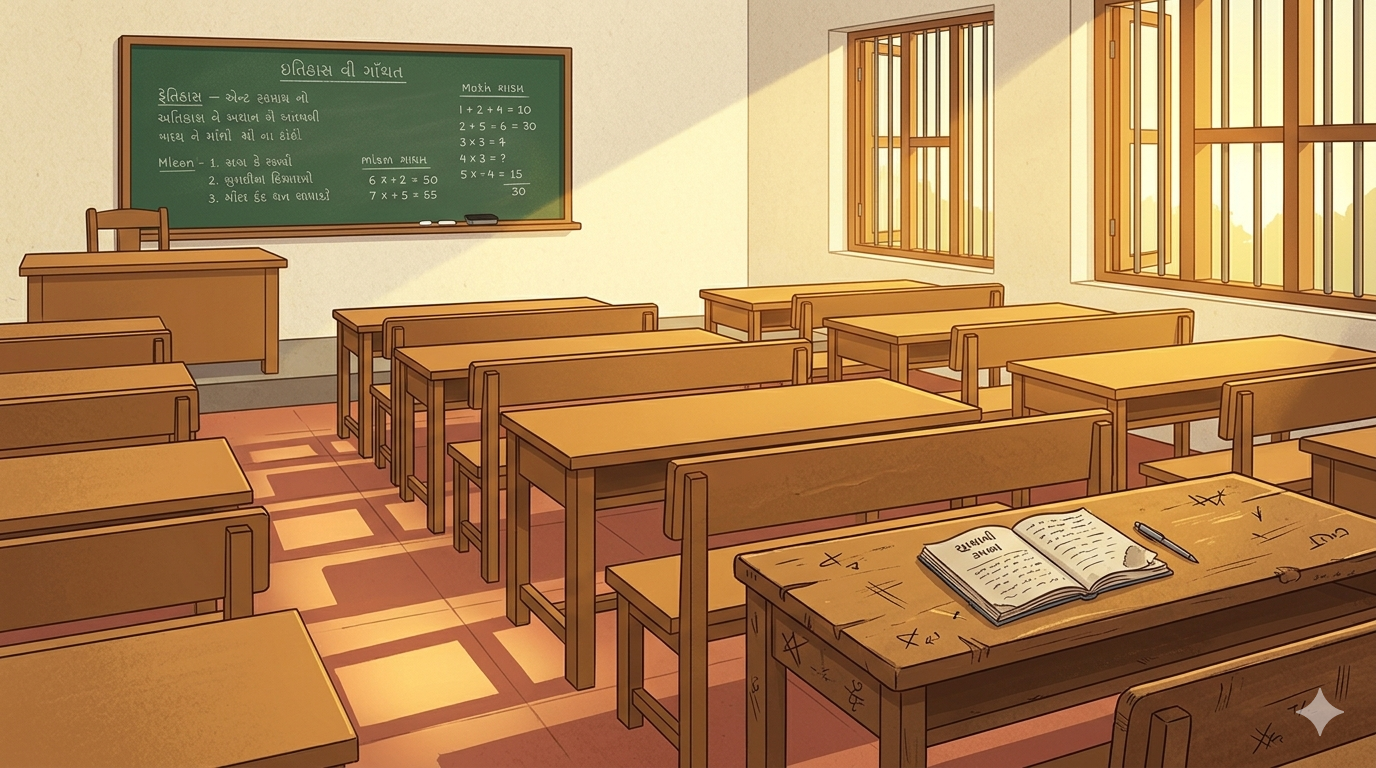
The last bench had its own rules.
You did not sit there by accident. You sat there because you had decided something - that the front was not for you, that the teachers had already made up their minds about who would answer questions, that it was better to be at the back where you could think your own thoughts without being called on.
Rohan had sat in the last bench since class six. He was now in class nine.
The new English teacher arrived in July.
Her name was Mrs. Iyer and she was small and wore glasses and did not look like someone who would change anything. On her first day she asked everyone to introduce themselves and say one thing they liked. Most people said cricket or music or their favourite subject.
Rohan, when his turn came, said he liked maps.
Everyone laughed. Not cruelly - just the way a class laughs at something unexpected.
Mrs. Iyer did not laugh. She looked at him for a moment. "What kind of maps?"
"Old ones," said Rohan. "Old maps of India. Where the borders were different."
"Come see me after class," she said, and moved on.
He went, expecting to be told something corrective.
Instead she opened her desk drawer and put a book in front of him. Old maps of the subcontinent, photocopied and bound. "I found this at a book fair years ago," she said. "I've been waiting for someone to give it to."
Rohan did not know what to say.
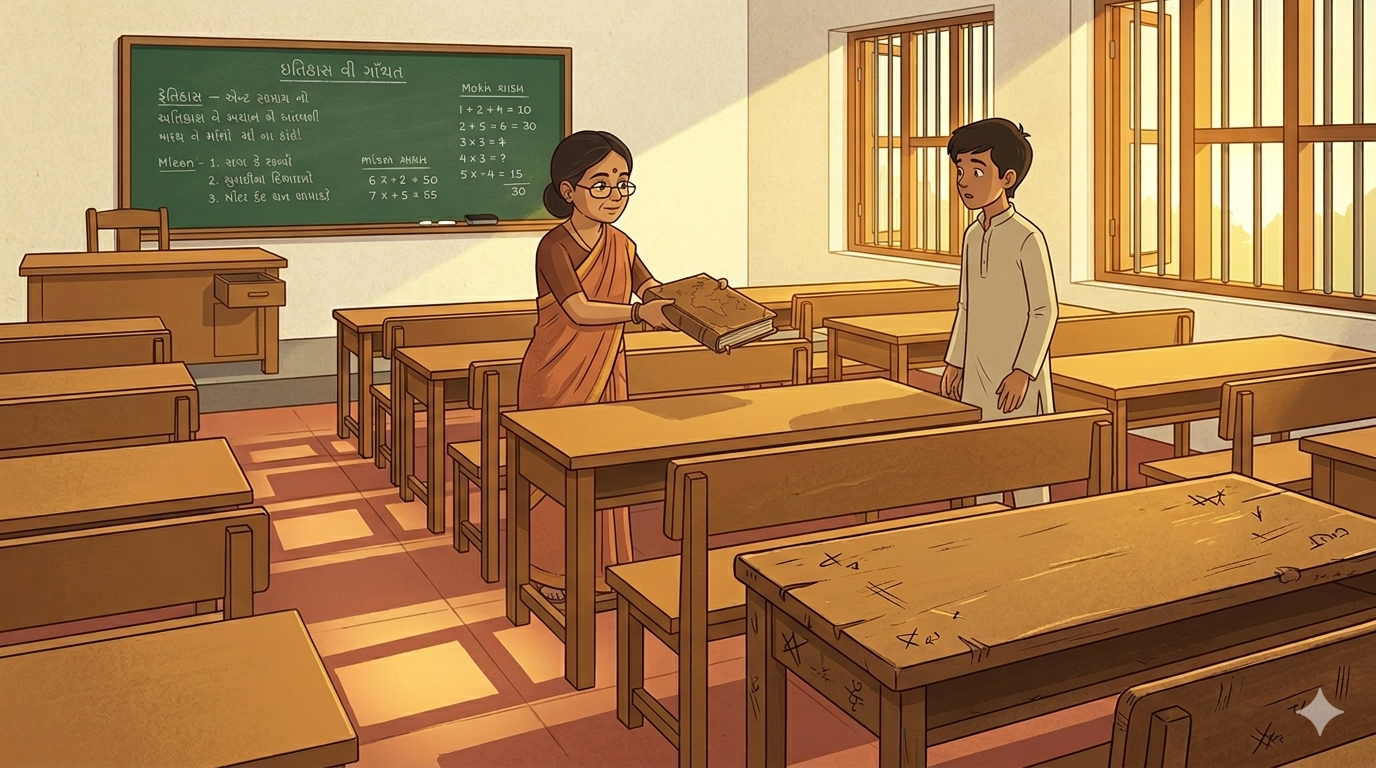
"You can keep it," she said. "I already know what's in it."
He stayed in the last bench for the rest of the year. But he started paying attention in English - not obviously, not in a way anyone would notice. Just quietly, from the back.
At the end of the year he got the highest mark in English in his class.
Mrs. Iyer said nothing about it specifically. But when she handed back his paper she held his eye for just a moment longer than necessary.
That was enough.
Some teachers find you exactly where you are sitting. They do not ask you to move forward. They just make you want to.
✦
✦ Kahaani Khatam ✦
Region [South India](https://bachpandiaries.com/stories/tag/region-south-india)
Format [Text](https://bachpandiaries.com/stories/tag/format-text)
Source [Original](https://bachpandiaries.com/stories/tag/source-original)
Characters [Everyday Heroes](https://bachpandiaries.com/stories/tag/char-everyday-heroes)
Read time [Short](https://bachpandiaries.com/stories/tag/time-short)
[← Previous story The Night Before Results](https://bachpandiaries.com/stories/the-night-before-results) [Next story → The First Salary](https://bachpandiaries.com/stories/the-first-salary)
Does this remind you of something? [Leave a comment below](https://bachpandiaries.com/stories/the-last-bench#post-comments).
Share [WhatsApp](https://wa.me/?text=The+Last+Bench+%7C+Bachpan+Diaries%20https%3A%2F%2Fbachpandiaries.com%2Fstories%2Fthe-last-bench) [X](https://twitter.com/intent/tweet?text=The+Last+Bench+%7C+Bachpan+Diaries&url=https%3A%2F%2Fbachpandiaries.com%2Fstories%2Fthe-last-bench) [Facebook](https://www.facebook.com/sharer/sharer.php?u=https%3A%2F%2Fbachpandiaries.com%2Fstories%2Fthe-last-bench)
Copy link

Manoj Rajput
I'm the founder of Bachpan Diaries. I started this project chasing down the small, ordinary memories of growing up in India that never seem to get written down anywhere, madaari shows, school bells, dabbas from home. I still read every story myself before it goes up.
FROM THE ARCHIVE
## Continue the Journey
### [ Ages 13–17 हिं The school trip to Agra was announced in February and the form had to be submitted by Friday. Read story → Kisse Kahani · 2 min read The School Trip Family The school trip to Agra was announced in February and the form had to be submitted by Friday. Manoj Rajput Jun 3](https://bachpandiaries.com/stories/the-school-trip)
### [ Ages 13–17 हिं The results were coming out at ten in the morning. Read story → Kisse Kahani · 2 min read The Night Before Results Family The results were coming out at ten in the morning. Manoj Rajput May 26](https://bachpandiaries.com/stories/the-night-before-results)
### [ Ages 13–17 हिं Vikram had a system. Read story → Kisse Kahani · 1 min read The Boy Who Read Comics in Class Friendship Vikram had a system. Manoj Rajput Apr 9](https://bachpandiaries.com/stories/the-boy-who-read-comics-in-class)
[All Stories](https://bachpandiaries.com/stories)
## Comments
Advertisement
MORE LIKE THIS
### More on this theme
[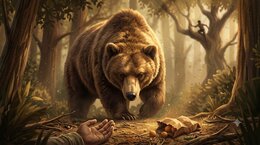](https://bachpandiaries.com/stories/two-friends-and-the-bear) [Two Friends and the Bear](https://bachpandiaries.com/stories/two-friends-and-the-bear)
There was a dense forest, and a narrow trail cut through it, the shortest way to the village on the other side. Two friends were walking that trail one evening. One was called Ramu, the other Shyamu.
[Read story →](https://bachpandiaries.com/stories/two-friends-and-the-bear)
[](https://bachpandiaries.com/stories/the-elephant-and-the-ant) [The Elephant and the Ant](https://bachpandiaries.com/stories/the-elephant-and-the-ant)
There was once a very big elephant named Motu.
[Read story →](https://bachpandiaries.com/stories/the-elephant-and-the-ant)
[](https://bachpandiaries.com/stories/the-lion-and-the-mouse) [The Lion and the Mouse](https://bachpandiaries.com/stories/the-lion-and-the-mouse)
A lion was sleeping under a tree when a mouse ran across his paw.
[Read story →](https://bachpandiaries.com/stories/the-lion-and-the-mouse)
EXPLORE
### Other chapters
- [🌟 Nanhe Sitare Ages 0–6](https://bachpandiaries.com/stories/tag/section-nanhe-sitare)
- [📚 Padhna Seekho Ages 7–12](https://bachpandiaries.com/stories/tag/section-padhna-seekho)
- [🎭 Kisse Kahani Ages 13–17](https://bachpandiaries.com/stories/tag/section-kisse-kahani)
- [📖 Bachpan Diaries Ages 18–40](https://bachpandiaries.com/stories/tag/section-bachpan-diaries)
- [🕰 Yaadein Ages 40+](https://bachpandiaries.com/stories/tag/section-yaadein)
STAY UPDATED
### New stories every week.
No spam. Unsubscribe any time.
Advertisement
Share
Copy
Continue where you left off?
Resume
Dismiss
[.svg) .svg)](https://bachpandiaries.com/stories)
Bachpan Diaries
- [Stories](https://bachpandiaries.com/stories)
- [Our Story](https://bachpandiaries.com/our-story)
- [Contact Us](https://bachpandiaries.com/contact)
- [Privacy Policy](https://bachpandiaries.com/privacy-policy)
- [Terms of Service](https://bachpandiaries.com/terms-of-service)
© 2026 Bachpan Diaries. Stories for Every Childhood
```json
{
"@context" : "https://schema.org",
"@type" : "BlogPosting",
"author" : {
"@type" : "Person",
"name" : "Manoj Rajput",
"url" : "https://bachpandiaries.com/stories/author/manoj-rajput"
},
"dateModified" : "2026-08-24T07:58:57.375Z",
"datePublished" : "2026-05-27T18:30:00.000Z",
"headline" : "The Last Bench | Bachpan Diaries",
"image" : [ "https://bachpandiaries.com/hubfs/bachpan-diaries-theme/blog/featured%20images/PNGs/Empty%20Classroom%20%E2%80%94%20Last%20Bench%20Most%20Worn.png" ],
"mainEntityOfPage" : {
"@id" : "https://bachpandiaries.com/stories/the-last-bench",
"@type" : "WebPage"
},
"publisher" : {
"@type" : "Organization",
"logo" : {
"@type" : "ImageObject",
"url" : "https://bachpandiaries.com/hubfs/bachpan-kite-icon.svg"
},
"name" : "BachpanDiaries"
}
}
```
```json
{
"@context" : "https://schema.org",
"@type" : "BreadcrumbList",
"itemListElement" : [ {
"@type" : "ListItem",
"item" : "https://bachpandiaries.com/",
"name" : "Home",
"position" : 1
}, {
"@type" : "ListItem",
"item" : "https://bachpandiaries.com/stories",
"name" : "Stories",
"position" : 2
}, {
"@type" : "ListItem",
"item" : "https://bachpandiaries.com/stories/the-last-bench",
"name" : "The Last Bench | Bachpan Diaries",
"position" : 3
} ]
}
```