.svg)
.svg)


We did not know at the time that it would be the last Diwali in that house. These things are never announced in advance.
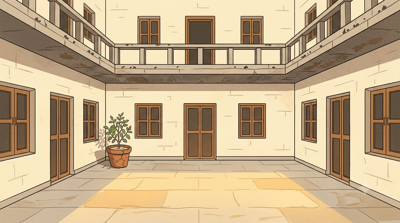
The house was in a mohalla in the old part of the city — a narrow lane, houses packed close together, the kind of place where you could hear your neighbour's pressure cooker and they could hear yours. It had been my grandfather's house, then my father's, and it was the only place in the world where I knew exactly where I was in the dark.
That October, there were five of us for Diwali — my parents, my younger sister, my father's brother Chacha, and his wife. Some cousins could not come this year. There were reasons — exams, distances, a new baby who was too small to travel. The house felt quieter than usual, and my father moved through it with a particular care, touching things lightly, as if he was already beginning a private kind of farewell.
We made the diyas together that afternoon, the way we always did. Maati ke diyas from the market, a hundred of them, which we washed and dried and then filled with oil, threading wicks of cotton through each one. My mother and my chachi sat on the floor of the courtyard and worked steadily, talking about nothing important, and I sat with them for a while and then went inside to help my father with the lights.
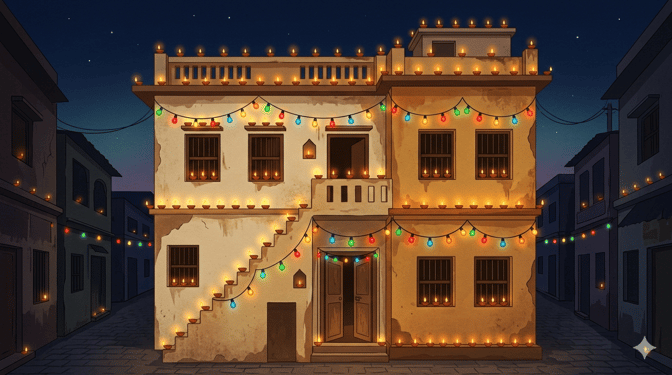
The lights were an old set — the kind with large coloured bulbs, not the LED kind, the bulbs that actually got warm when you held them, that cast a thick coloured light, red and green and blue, the colours of Diwali as I had always known it. Some bulbs had died over the years and been replaced with whatever we could find, so the string was now slightly mismatched, which my father found charming and my mother found maddening.
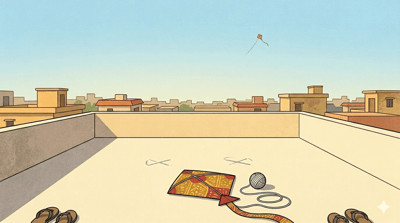
We strung them along the parapet of the terrace and across the front door, and when we turned them on in the early evening, the old house looked like itself — like the house I had grown up in, the house of every Diwali I could remember.
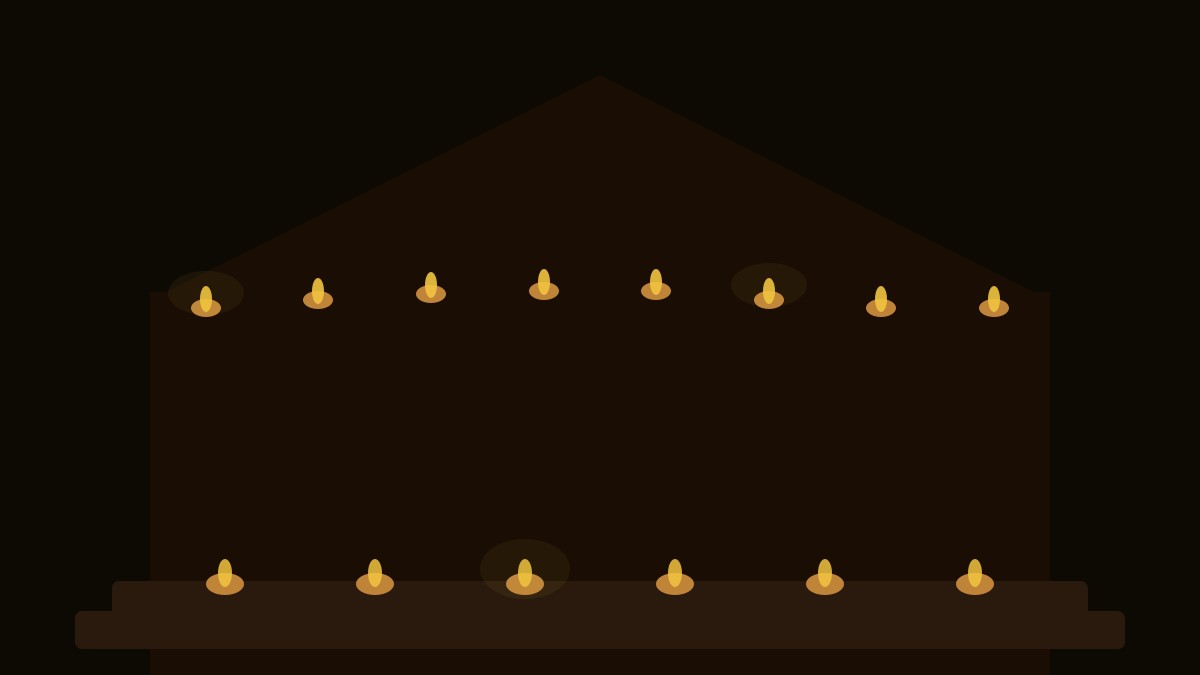
We lit the diyas as it grew dark, placing them along every ledge and step and windowsill. A hundred small flames, each one catching the draft from the lane and flickering but not going out. From the roof you could see them all at once, and I stood there for a long time, long enough that my sister came to find me, and we stood together without talking.
We ate at ten — kheer, poori, aloo sabzi, and a mithai that Chacha had brought from a shop in the bazaar that had been making the same barfi for sixty years. We sat on the floor, on a durrie, and ate from steel plates, and the conversation wandered from the past to the present and back again the way it always does in families on the nights when everyone knows something is ending.
The next spring, the house was sold. There were reasons — practical, sensible, adult reasons that I understand and do not entirely forgive. The new owners repainted everything white.
I don't know if they celebrate Diwali there now. I imagine they might. Light finds its way into houses regardless of who lives in them.
But I carry those diyas with me. A hundred small flames, flickering in a draft, on the ledges of a house that is gone.
They have not gone out.