.svg)
.svg)


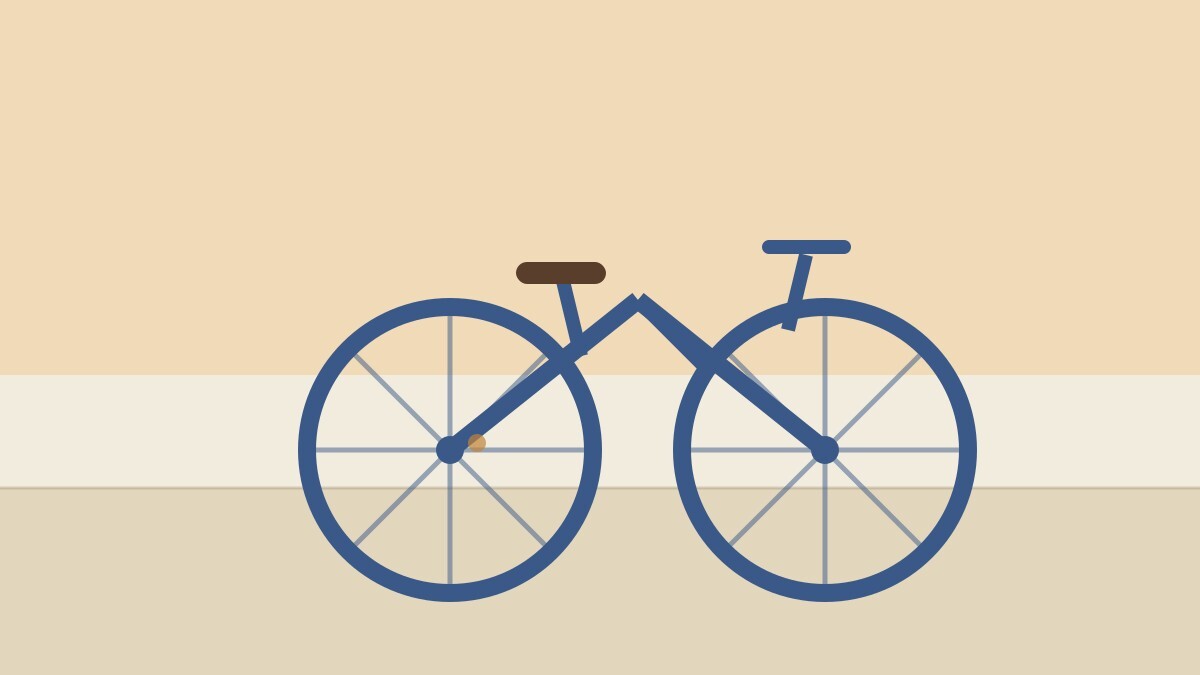
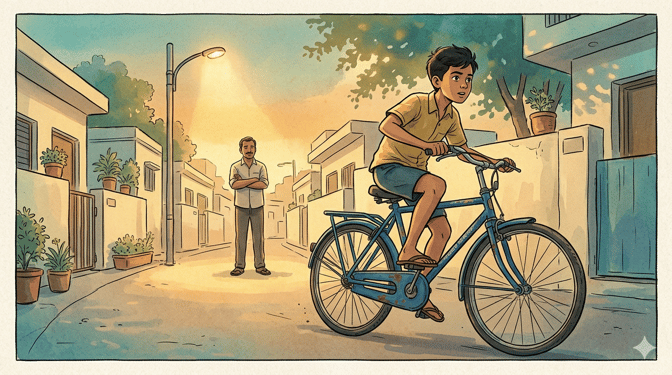
The bicycle had been his father's before it was his — a sturdy Hero Ranger, painted blue, with a tiny rust spot near the left pedal that his father had never got around to fixing.
Arjun was thirteen when his father finally said: "It is yours now." This was said simply, without ceremony, one Saturday morning, the way his father said everything important — as if the words were ordinary, when they were not ordinary at all.
He could not yet ride it. This was embarrassing to admit at thirteen. All his friends had been riding since they were eight, racing each other down the slope behind the school, popping wheelies in the park. Arjun had always found reasons to avoid it — homework, a sore knee, vague plans that evaporated when examined.
The truth was simpler: he was afraid of falling.
His father taught him in the colony lane every evening for two weeks. He held the seat at first, running alongside. Then he let go — once, then twice, then regularly — while Arjun still thought he was being held.
The evening Arjun realised his father had let go twenty metres ago and he was still riding, he felt something click into place inside him. Not just balance — something larger. The feeling that you can be further along than you think you are, that support can be invisible and still real.
He rode all the way to the end of the lane and back without stopping.
His father was standing where he had left him, arms crossed, watching with an expression that was not quite a smile but was warmer than one. "See," was all he said.
Later that year, his father was transferred to another city for work. He came home only on weekends for a while, and then less than that. The colony lane became Arjun's alone.
Years later, when Arjun was grown and the bicycle had long since been outgrown, he would still sometimes see a blue bicycle leaning against a wall somewhere and feel, briefly, two things at the same time: the clean joy of that evening he first rode alone, and the ache of understanding what that meant — that at the moment you find your balance, the hand that taught you has already let go.
He came to believe this was not a sad thing. It was just what growing up is.