.svg)
.svg)


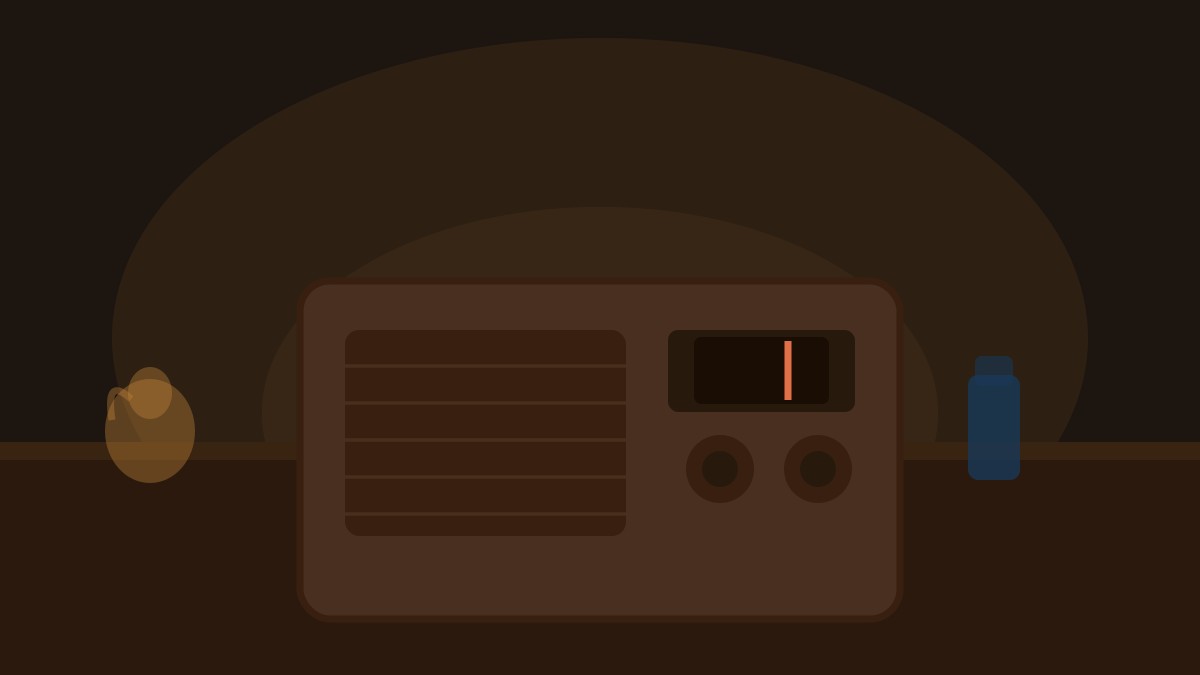
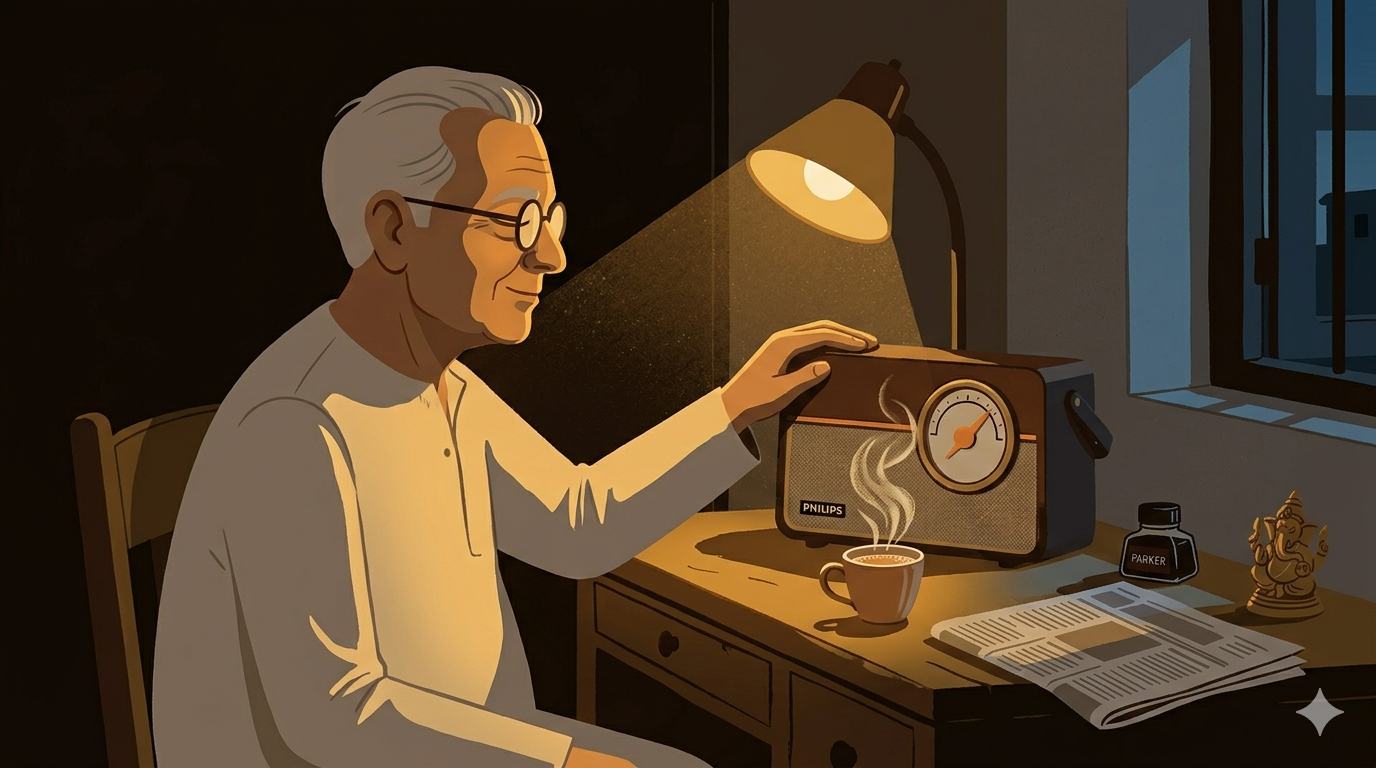
My father's radio was a Philips transistor — dark brown bakelite with a round dial and a little orange needle that moved when you turned the tuning knob. It sat on the shelf above the desk in his study, next to a bottle of Parker ink and a small brass Ganesh that had been given to him by his own father.
He turned it on every morning at six. The signal would come and go in those early minutes — a crackle of static, then Vividh Bharati through the interference, then sometimes nothing, and then the announcer's voice, unhurried and warm, the way voices were on the radio then, reading out the news in Hindi with a formality that made even the ordinary feel significant.
I grew up thinking this was simply what mornings sounded like.
My father did not explain his love for the radio, the way he did not explain most of the things he loved. He loved it the way he loved the newspaper and strong tea and a particular brand of digestive biscuit that he dunked precisely twice before eating — quietly, consistently, without fanfare. These rituals were the architecture of who he was.
When I was home from college one summer, I noticed the radio had stopped working. The needle was stuck. My father had it on the desk, open, the back panel removed, an array of tiny components spread on a sheet of newspaper beside it.
"I found a man in the bazaar who repairs these," he said, without looking up. "He says he can fix it if he can find the part. He thinks he has seen this model before."
I did not say what I was thinking, which was that a new radio would cost less than the repair. He knew this. He was not repairing the radio because it was efficient to do so. He was repairing it because it was his radio, and the difference mattered to him in a way I was just beginning to understand.
The bazaar man fixed it. It sat on the shelf for another twelve years, through two house moves and a grandchild and my father's retirement and a heart surgery that we did not like to talk about directly.
He died in February, on a cold morning that smelled of woodsmoke. The radio was still on the shelf.
I have it now. I don't know why I kept it — I never listened to Vividh Bharati, never had the patience for those long morning news readings. But last year I had it repaired again, found a man through the internet who knows about old transistors, and now it sits on my own shelf, next to a picture of my father and a small brass Ganesh.
I turn it on sometimes, in the morning. The signal comes and goes. Sometimes there is music I don't recognize, sometimes only static.
I listen anyway. I am still learning what it means to inherit something — not the object, but the quality of attention that the object represents. My father listened to that radio with his whole self, present, unhurried, as if the sound mattered.
I am trying to do the same.