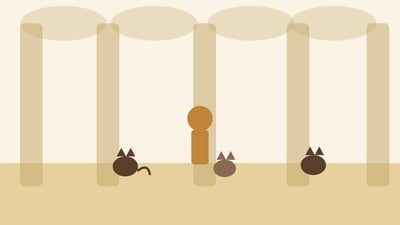
One winter morning, Emperor Akbar made an announcement in his court.
"I have been told," he said, "that a man can survive a night standing in the cold waters of the Yamuna. I do not believe it is possible. Anyone who does this will receive one hundred gold coins."
The court laughed. Nobody would be foolish enough to try.
But outside the palace, a poor man heard about the reward. He had a sick wife and hungry children and a house with no roof. He needed the money.
That night, he stood in the Yamuna up to his waist. The water was so cold his bones ached. His teeth knocked together. He could not feel his feet.
But he stood.
All night he watched a small oil lamp burning in a window of the palace far away. He fixed his eyes on it. As long as he could see the lamp, he told himself, he was not alone.
By morning, he had done it.
He came to the court shaking and blue-lipped but alive. Akbar was amazed. "How did you survive?" he asked.
The man told him about the lamp in the palace window.
Akbar's face changed. "You cheated," he said. "You took warmth from the lamp. The reward is cancelled."
The man went home empty-handed.
Birbal said nothing that day. But the next morning, when the court gathered, Birbal was not there. Akbar sent a messenger to his house. The messenger returned puzzled. "He says he is cooking khichdi, Your Majesty. He will come when it is ready."
An hour passed. Then two. Akbar went to Birbal's house himself. He found Birbal sitting beside a small fire, a pot of rice hung six feet above the flames.
"What are you doing?" Akbar said. "The pot is nowhere near the fire. The rice will never cook."
"Then perhaps," said Birbal quietly, "a lamp burning in a palace window cannot warm a man standing in a freezing river either."
Akbar was silent for a long time.
Then he called for the poor man and gave him not one hundred gold coins but two hundred. ✦